- The poplar (Populus) is a fast-growing, widely distributed tree belonging to the Salicaceae (willow) family.
- It is known for its many species, including white poplar (Populus alba), black poplar (Populus nigra), and others.
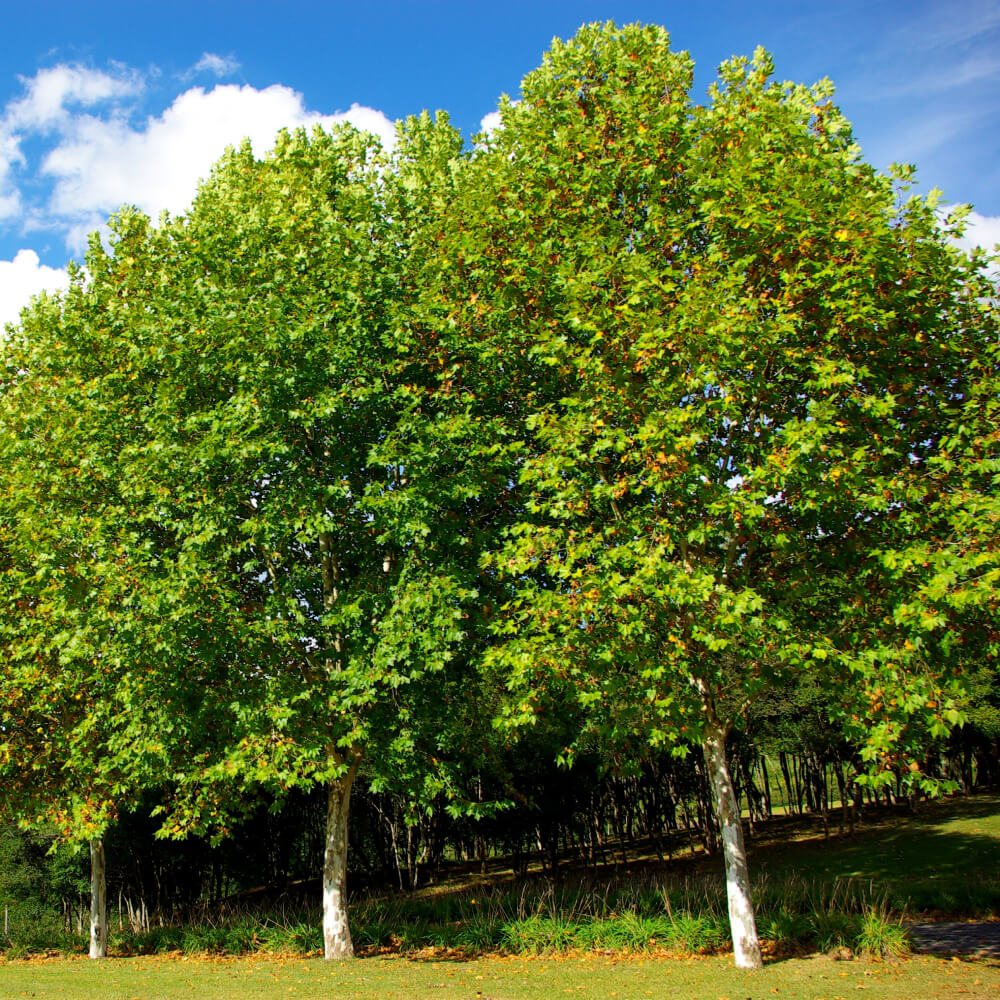
- Poplars can reach heights of 30–40 meters. Their leaves are broad and often lobed or notched in the middle.
Characteristics
- Poplar trees are well known for their rapid growth. Most species are fast-growing and can increase in height by up to 3–4 meters per year.
- One of their most important characteristics is their high capacity for water uptake and air purification.
- Poplars consume large amounts of water, processing it through their biological systems and contributing to cleaner air. They are also widely recognized as trees with high oxygen production. Their broad leaf surface allows them to absorb significant amounts of carbon dioxide (CO₂).
Uses
- Poplars are often used for water filtration and environmental remediation. They help regulate river and groundwater levels due to their high water demand.
- In addition, they are commonly planted as ornamental trees in cities and parks.
Relevance for Yerevan and Armenia
- Poplars are particularly valuable in areas with high air pollution. In urban parks and public gardens, they provide shade, which is especially beneficial during the summer months.
- In the mountainous regions of Armenia and along riverbanks, certain poplar species can also play an important role in afforestation and landscape stabilization efforts.