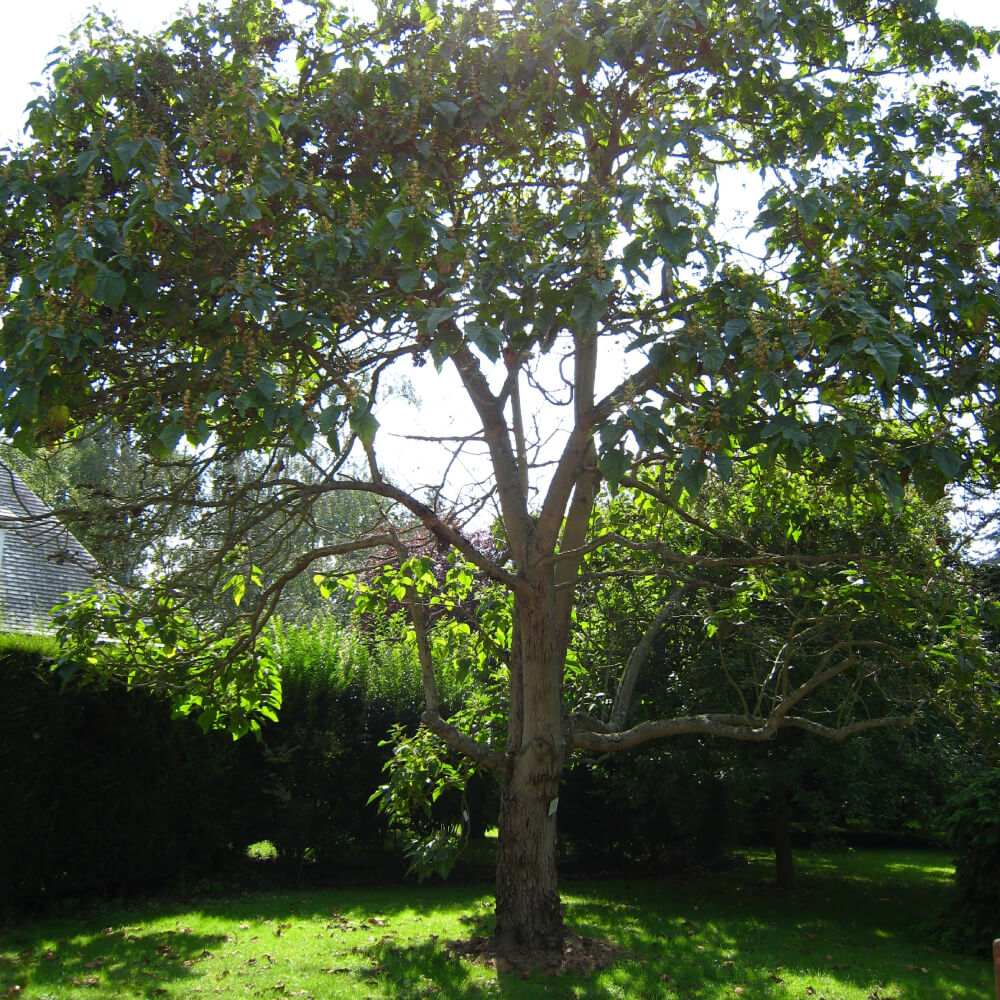
Botanical Dictionary Information
- Paulownia trees belong to the Paulowniaceae family.
- The most commonly distributed species today is Paulownia tomentosa.
- It reaches a height of about 15–20 meters.
- The flowers are purple or light blue and produce a large amount of nectar, which is beneficial for beekeeping.
Characteristics
- Rapid growth, increasing by about 3–4 meters per year.
- It has very large leaves, up to 40 cm in length, which effectively absorb CO₂ and release oxygen.
- It is highly resistant to various climatic conditions and climate changes.
- It is very easy to cultivate, requires minimal care, and adapts well to different soil types.
Uses
- Agriculture: improves soil quality and is useful as a greening plant.
- Beekeeping: the flowers produce large amounts of nectar, making them valuable for honey production.
- Soil stabilization: used for soil conservation and improvement.
Relevance for Armenia
- It is excellent for soil improvement and protection against wind erosion.
- It has high value for beekeeping and agricultural use.
- In Yerevan, it can be used for urban greening, helping to clean the air.